
2-step stem cell transplant boosts 5-year survival in blood cancer
Standard 1-step strategy in myelofibrosis, while curative, has higher risks
Written by |

A stem cell transplant for myelofibrosis patients is given by infusing donor cells into the bloodstream intravenously. (Image from iStock)

Adults with myelofibrosis who received a two-step donor stem cell transplant saw their blood counts recover faster and lived longer than patients who received a traditional one-step transplant.
Those are the findings of a new study by scientists at Thomas Jefferson University in Philadelphia that compared outcomes among a small number of people with myelofibrosis undergoing a transplant — which, the team noted, “remains the only curative treatment option” for this cancer — at their hospital.
In a traditional one-step transplant, donor stem cells are infused in a single procedure. A two-step transplant separates the process into two stages: Donor immune cells are infused first, followed a few days later by donor stem cells. The newer approach, the scientists noted, was designed to improve cell engraftment and reduce complications among patients.
While stem cell transplants can be a cure for myelofibrosis, the treatment strategy nonetheless “presents significant challenges, including high … mortality … and an increased risk of graft failure,” the researchers wrote.
According to the team, “the two-step transplant approach employed at our institution demonstrated superior outcomes, with … significantly decreased [mortality] and improved [overall survival].” Survival, the data showed, was higher than 80% at the one-year mark and more than 65% at five years.
These results highlight the potential of two-step transplants “as an effective strategy” for improving outcomes among people with this type of blood cancer, the researchers wrote.
The study, “The Two-Step Allogeneic Stem Cell Transplant Is Associated with Excellent Engraftment, Improved Survival and Low Nonrelapse Mortality in Patients with Myelofibrosis,” was published in the journal Hematology/Oncology and Stem Cell Therapy.
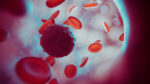
Myelofibrosis develops when the bone marrow — the spongy center inside bones — produces an excess of abnormal blood cells. This causes fibrous (scar) tissue to replace normal bone marrow, making it difficult for the bone marrow to produce healthy blood cells.
The only potential cure to date for myelofibrosis is an allogeneic hematopoietic stem cell transplant (HSCT), also called a donor stem cell transplant, in which healthy blood-forming stem cells from a donor repopulate a patient’s fibrotic bone marrow.
Comparing outcomes with 1 vs. 2 transplant steps
Although HSCT can extend survival, it is very intensive and comes with risks. Serious complications include graft failure, which occurs when the donor stem cells do not successfully grow in the patient’s bone marrow, and death from transplant-related complications.
In this study, the scientists reviewed the medical records of 32 adults diagnosed with myelofibrosis who received donor stem cell transplants at Thomas Jefferson University Hospital between 2001 and 2023. The patients had a median age of 60 at the time of the procedure, and were followed for a median of nearly six years.
HSCT normally begins with a course of high-dose chemotherapy to destroy abnormal blood cells in the bone marrow. Healthy stem cells from a donor are then infused into the bloodstream. These stem cells travel to the bone marrow, where they can engraft, meaning they settle, grow, and begin producing new, healthy blood cells.
The researchers compared this one-step procedure with a newer two-step strategy in which donor immune T-cells are infused first, followed by cyclophosphamide to remove immune cells that could attack the patient or cause transplant rejection. Healthy stem cells, selected for the presence of a protein called CD34, are then infused several days later. Separating these steps protects the healthy stem cells from cyclophosphamide.
Before HSCT, all patients received conditioning therapy — chemotherapy, radiation therapy, or both — to prepare their bone marrow for the stem cell transplant. Each also received medications to reduce the risk of graft-versus-host disease (GVHD), a complication in which transplanted cells attack the host’s healthy tissues.
Individuals with enlarged spleens additionally received spleen radiation before the transplant to reduce trapping of donor stem cells.

Survival with newer strategy topped 80% at 1 year
A total of 14 patients underwent the one-step procedure, while 18 had the two-step transplant.
Those given the two-step procedure recovered blood counts faster than those who underwent the one-step transplant, the data showed. Neutrophils, a type of immune cell, recovered in a median of 12 days compared with 20 days, while clot-forming platelets recovered in 19 days versus 57 days. Four patients in the one-step group never recovered their platelet counts, the researchers noted.
Graft failure occurred in three patients: one (6%) in the two-step group and two (18%) in the one-step group, the data showed.
Across all 32 patients, overall survival was 66% at one year and 54% at five years. Progression-free survival, which refers to the proportion of patients who remained alive without the disease returning or worsening, was 66% at one year and 50% at five years.
Patients who underwent the two-step procedure had better outcomes, the researchers found. Their overall survival was 83% after one year and 68% after five years, compared with 43% and 34% for patients undergoing the one-step procedure.
These findings suggest that the two-step transplant platform is a viable and effective strategy for improving [stem cell transplant] outcomes in myelofibrosis.
Death from transplant-related causes was also lower with the two-step procedure, with rates of 17% after one year and 23% after five years, compared with 57% and 66% after the one-step procedure, the researchers noted.
Moderate to severe acute GVHD developed in 17.3% of patients, and chronic GVHD, a longer-lasting form of GVHD, occurred in 16.9%. Most cases affected the skin, although some involved the digestive tract, the liver, or the lungs, the data showed.
Overall, according to the scientists, “these findings suggest that the two-step transplant platform is a viable and effective strategy for improving HSCT outcomes in myelofibrosis.”
The small number of patients was noted as a study limitation, “yet the extended follow-up period provides valuable insights into long-term outcomes,” the team wrote. “Further studies are warranted to validate these results and refine HSCT protocols to reduce transplant-related mortality and improve long-term survival in patients with myelofibrosis.”

Leave a comment
Fill in the required fields to post. Your email address will not be published.